


If you run a home brewery, whether it’s a small 10-gallon nanobrewery out of your garage or a 100-gallon operation that supplies local restaurants, you know brewing is a process that can’t be interrupted mid-cycle. One power blip can waste hours of work, hundreds of dollars in grain, hops, and yeast, and set back your entire brew schedule. That’s why picking the right home brewery electricity generator isn’t just a backup—it’s a critical investment in protecting your product and your business. After 12 years as a generator supplier focused exclusively on small to medium commercial and home power needs, I’ve worked with dozens of brewers to pick units that fit their specific brewing workflows, not just generic “backup power” lists. Let’s break down what matters most for home brewers, and which generators check those boxes best.
First, let’s talk about brewing power demands, because that’s non-negotiable for choosing a generator. Brewing isn’t just lighting a space—you’re running multiple high-wattage systems at the same time: your mash tun’s heating element (which often pulls 5,000 to 10,000 watts on its own), recirculating pumps, temperature controllers, refrigeration for wort and finished beer, fermentation temperature regulators, and even lighting and small office equipment for logging recipes and sales. Most home brewers underestimate how much power they need until they test a generator that dies when they turn on both the mash tun and the chiller. A quick rule of thumb: add up the running watts of all your key brewery equipment, then add 20-30% extra for startup surges—motors and heating elements draw extra power when they kick on, and if your generator can’t handle that surge, it’ll cut out mid-brew.
For example, if your setup has a 8,000-watt mash heater, two 1,500-watt recirculating pumps, a 2,000-watt wort chiller, and a 1,000-watt fermentation temperature controller, your total running demand is 12,500 watts. Add 30% for surges, and you’re looking at needing a generator that can handle at least 16,250 starting watts. That’s where generator sizing gets tricky, because many entry-level portable gas generators fall short here—they’re fine for powering a fridge and a TV, but not a brewery’s heavy gear consistently.
Now, let’s dive into the different fuel types and generator styles, because not all power solutions work for home brewing. I’ve had brewers come to me asking for solar generators, but here’s the catch: most solar generators for home use have low surge capacity, and if you’re brewing on a cloudy day or during a time when grid power goes out, you might not have enough stored battery to power a full brew. Propane generators are cleaner, but they’re less fuel-efficient and can have longer startup times—when a power outage hits, you want your generator to kick on in seconds, not minutes, to save your wort from spoiling. That leaves diesel generators as the top pick for home brewers, hands down. Diesel engines are more fuel-efficient, have longer run times on a single tank, and are built to handle heavy, consistent loads—exactly what a brewery needs during a multi-hour brew.
But not all diesel generators are the same. Let’s start with the smallest end first: if you’re a hobbyist brewer with a tiny setup, maybe 5 gallons per batch, and you only need to power a few core pieces during an outage, check out our small diesel generators for home use. These compact units are easy to move around, perfect for garages or small outbuildings, and they’re rated for consistent, light loads—great for hobby brewers who don’t run multiple high-watt systems at once. I helped a home brewer in Ohio last year who used one of these during a winter ice storm that knocked out power for 36 hours; he powered his mash tun, a small refrigerator for yeast starters, and the lights, and only used half a tank of fuel the whole time. It’s not overkill, but it’s exactly what he needed for his hobby setup.
If you’re scaling up a bit, say you do 10 to 50 gallons per batch, and you run more equipment—maybe you have a dedicated wort chiller, multiple fermentation chambers, and even a bottling line—you’ll want something with a bit more power. The 15kw diesel generator is a sweet spot here. A 15kw unit can handle the full load of most mid-sized home breweries, including startup surges from heating elements and pumps, and it’s built to run for 8+ hours on a single tank, which is enough for a full brew day. We’ve had brewers in Texas and California use these during grid outages from summer heat and wildfire season, and they’ve never had issues with the generator cutting out mid-mash or wort cooling.

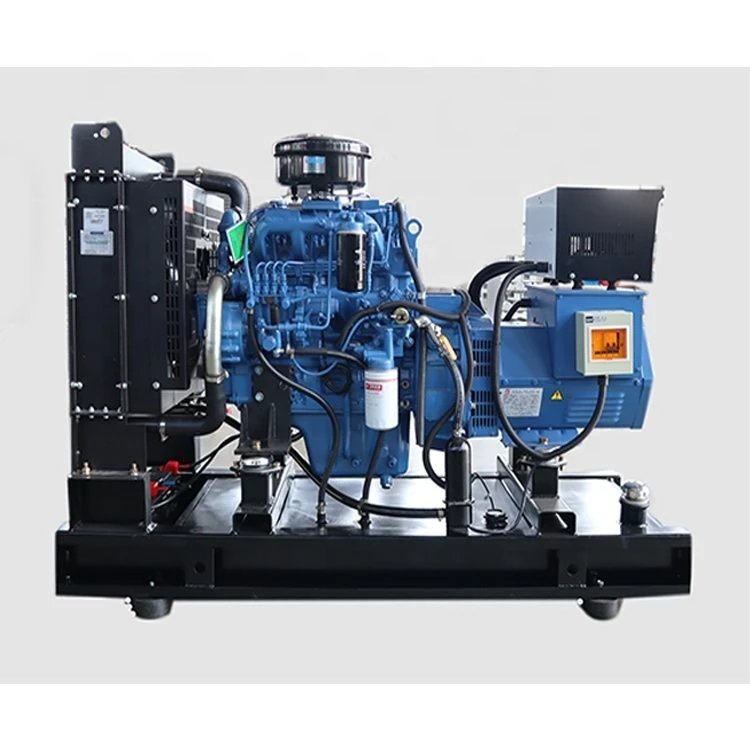
For brewers that are getting closer to small commercial volumes, maybe 50 to 100 gallons per batch, or who have a dedicated brewery space with multiple systems running at once—like a separate mashing area, a cold room for storing finished beer, and bottling equipment—you’ll want to step up to the 30kw diesel generator. This unit has enough power to handle simultaneous loads without straining, and it’s even built to be permanently installed as a standby generator, so you don’t have to move it around every time you need it. A home brewer I worked with in Colorado switched to a 30kw unit after a 12-hour power outage ruined a 50-gallon batch of IPA; now his generator kicks on automatically when the grid drops, and he hasn’t had a spoiled brew in two years.
Now, you might be thinking: what if I want something that’s even more powerful, just in case I expand my brewery in the future? Well, if you’re planning to add more equipment or scale up to full commercial home brewery levels, the 75kw diesel generator is perfect. It’s a step above mid-sized standby units, with enough power to run multiple large-scale brewing systems at once, from mash kettles to cold rooms to packaging equipment. And for brewers that are ready to make a bigger leap, even the 460KW diesel fuel generator is an option, though that’s more suited for larger, full-commercial home brewery operations that are supplying local bars and restaurants regularly.
But wait—there are a few more things to consider beyond just wattage when picking a generator for your home brewery, because brewing has unique needs. First, automatic transfer switches (ATS) are a must-have. An ATS connects your generator directly to your home brewery’s electrical panel, so when the grid power goes out, it switches over in 10 seconds or less—no need to manually plug in cords, which is critical when you’re in the middle of heating mash and can’t let it drop in temperature. All of the diesel generators we offer can be paired with an ATS, and we help brewers size that correctly too.
Second, noise level is a big one, especially if your home brewery is in a residential area. No one wants to be the neighbor whose generator is so loud it causes complaints every time the power goes out. Modern diesel generators are much quieter than older models, and all of our units are sound-dampened, so they run at a level similar to a lawnmower or a mid-sized car driving by—quiet enough that you can still hold a conversation near it while it’s running. I’ve had brewers tell me their neighbors barely notice the generator is on during a power outage, which is a huge plus for keeping good relationships.
Third, fuel storage and accessibility. Diesel has a longer shelf life than gasoline, so you don’t have to worry about it going bad if you only use the generator a few times a year. We recommend storing extra diesel in approved tanks, and all of our generators have large fuel tanks that run for 8 to 12 hours continuously, which is enough for even a full brew day. Some brewers opt to connect their generator directly to a bulk fuel tank, which means they don’t have to refuel it manually for months—something we can help set up if you’re scaling up.
I’ve heard from a lot of brewers who tried to cut corners with cheap portable gas generators, only to have them fail mid-brew. One brewer in Oregon told me he used a $500 portable generator for his small nanobrewery, and during a power outage, it died when he turned on his mash tun and chiller, ruining 20 gallons of beer that cost him over $300 in ingredients. That’s the kind of mistake you don’t want to make with a generator for your brewery. Diesel generators are a bit more expensive upfront, but they last 10-15 years with proper maintenance, which pays for itself in the savings from not having to replace spoiled brews.
Another thing to keep in mind is maintenance. Unlike portable generators that require a lot of frequent tune-ups, diesel generators are built for heavy, continuous use, and they have simpler maintenance schedules—most only need an oil change every 100-200 hours of operation, which is far less than gas generators. We offer maintenance plans for all of our units, so you don’t have to worry about tracking when you need service, and we have 24/7 support if you ever have an issue during a power outage, which is a huge peace of mind for brewers who can’t afford downtime.
Let’s wrap this up with a quick guide to matching your generator to your brewery size, just to make it easy:
- Hobby brewers (up to 5-gallon batches, light load only): Small diesel generators for home use
- Mid-size home brewers (10-50 gallon batches, multiple systems): 15kw diesel generator
- Scaling home brewers (50-100 gallon batches, dedicated brewery space): 30kw diesel generator
- Expanding or planning full commercial operation: 75kw diesel generator (or 460KW diesel fuel generator for very large setups)
At the end of the day, the best electricity generator for your home brewery isn’t the biggest one on the shelf—it’s the one that fits your current brewing volume, has enough surge capacity for your equipment, and is built to handle the heavy, reliable power you need to protect your beer. I’ve worked with hundreds of brewers across the country, and every time, the ones that pick the right diesel generator have fewer spoiled brews, less stress during outages, and a system that grows with them as their brewery expands.
If you’re ready to talk through your specific setup, figure out exactly what size and type of generator works for your home brewery, or want to learn more about installation, ATS pairing, or maintenance plans, don’t hesitate to reach out for a personalized consultation. Whether you’re a hobbyist just starting out or a small-scale brewer looking to upgrade, we can help you find the perfect solution to keep your brew day running, no matter what the grid throws at you.
References:
- American Society of Brewing Chemists. (2021). Brewing Power Requirements and Energy Efficiency. ASBC Journal.
- Diesel Technology Forum. (2022). Benefits of Diesel Generators for Commercial and Industrial Use. DTF Technical Report.
- Homebrewers Association of America. (2023). Backup Power Guide for Home Brewing Operations. HAA Resource Library.
- Occupational Safety and Health Administration. (2022). Generator Safety for Residential and Small Business Use. OSHA Publication.


