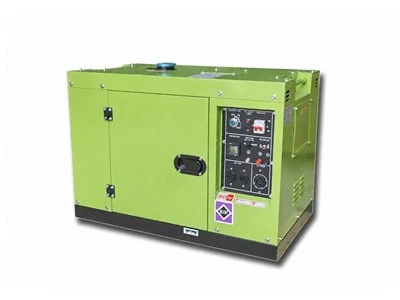
In the realm of construction, diesel generators are the backbone of reliable power supply. They ensure that construction sites can operate smoothly, regardless of the availability of the main grid. As a supplier of Construction Diesel Generators, I've witnessed firsthand the critical importance of each component within these machines. One such component that often goes unnoticed but plays a pivotal role is the crankshaft. In this blog post, I'll delve into the significance of the crankshaft in a Construction Diesel Generator and how it impacts the overall performance.
Understanding the Basics of a Construction Diesel Generator
Before we explore the role of the crankshaft, it's essential to have a basic understanding of how a Construction Diesel Generator works. These generators Construction Diesel Generator consist of two primary parts: the diesel engine and the alternator. The diesel engine burns fuel to produce mechanical energy, and the alternator converts this mechanical energy into electrical energy.
The diesel engine operates on a four - stroke cycle: intake, compression, power, and exhaust. During the intake stroke, air is drawn into the combustion chamber. The compression stroke compresses this air, increasing its temperature and pressure. When the fuel is injected into the highly compressed air, it ignites spontaneously, creating a powerful explosion that drives the piston down during the power stroke. Finally, the exhaust stroke expels the burned gases from the chamber.
The Crankshaft: A Central Component
The crankshaft is a vital part of the diesel engine in a Construction Diesel Generator. It is a mechanical device that converts the linear motion of the pistons into rotational motion. This rotational motion is then transferred to the alternator to generate electricity.
In a construction diesel generator, the crankshaft is typically made of high - strength steel. This material is chosen because it can withstand the enormous forces and high - speed rotations that occur within the engine. The design of the crankshaft is complex, with multiple crankpins and counterweights. The crankpins are the parts where the connecting rods attach to the crankshaft, while the counterweights are used to balance the rotating assembly and reduce vibrations.
Conversion of Linear to Rotational Motion
The most fundamental role of the crankshaft is to convert the linear (up - and - down) motion of the pistons into rotational motion. When the fuel in the combustion chamber ignites, it pushes the piston down with great force. This linear motion is transferred to the connecting rod, which is attached to the piston at one end and the crankpin on the crankshaft at the other end. As the piston moves down, the connecting rod forces the crankpin to rotate around the main axis of the crankshaft.
This conversion of motion is crucial for the operation of the Construction Diesel Generator. The rotational motion of the crankshaft is what drives the alternator, which in turn produces electricity. Without this conversion, the linear motion of the pistons would be useless for generating power, and the generator would not be able to function.
Balancing and Vibration Reduction
Another important role of the crankshaft is to balance the engine and reduce vibrations. In a multi - cylinder diesel engine, the pistons move up and down at different times. If not properly balanced, these uneven forces can cause excessive vibrations, which can lead to premature wear and tear of the engine components, reduced efficiency, and even damage to the generator itself.
The counterweights on the crankshaft are carefully designed and positioned to counteract the forces generated by the moving pistons. By balancing the rotating assembly, the counterweights help to minimize vibrations, ensuring a smooth and stable operation of the engine. This is especially important in a Construction Diesel Generator, as it is often used in harsh environments where any additional stress on the components can lead to breakdowns.
Power Transmission
The crankshaft also plays a key role in transmitting power from the engine to the alternator. Once the crankshaft has converted the linear motion of the pistons into rotational motion, it transfers this motion to the alternator through a coupling or a belt drive. The high - speed rotation of the crankshaft is what drives the alternator's rotor, which then generates electricity.
In a Construction Diesel Generator, the power output of the generator is directly related to the speed and torque of the crankshaft. A well - designed crankshaft can efficiently transfer the power produced by the engine to the alternator, ensuring that the generator can meet the power demands of the construction site.
Impact on Generator Performance
The performance of the crankshaft has a significant impact on the overall performance of the Construction Diesel Generator. A high - quality crankshaft can improve the efficiency of the engine, reduce fuel consumption, and increase the lifespan of the generator. On the other hand, a faulty or poorly designed crankshaft can lead to a variety of problems, including reduced power output, increased vibration, and frequent breakdowns.
For example, if the crankshaft is not properly balanced, the engine will vibrate excessively, which can cause the bearings to wear out more quickly. This can lead to increased friction, reduced efficiency, and eventually, engine failure. Similarly, if the material of the crankshaft is of poor quality, it may not be able to withstand the high - stress environment within the engine, resulting in cracks or other forms of damage.
Different Types of Diesel Generators and the Role of the Crankshaft
We supply various types of diesel generators, including Prime Power Diesel Generator, Marine Diesel Generator Set, Standby Diesel Generator Set, and Open Type Diesel Generator. In each of these generators, the crankshaft plays a similar but slightly different role.
In a Prime Power Diesel Generator, which is designed to provide continuous power, the crankshaft needs to be highly reliable and efficient. Since it operates for long periods, any inefficiency or fault in the crankshaft can lead to significant energy losses and increased operating costs.
For a Marine Diesel Generator Set, the crankshaft must be able to withstand the harsh marine environment, including high humidity, saltwater corrosion, and rough sea conditions. It also needs to be well - balanced to ensure smooth operation on a moving vessel.
A Standby Diesel Generator Set is designed to provide power during emergencies when the main grid fails. The crankshaft in this type of generator needs to be able to start quickly and deliver full power within a short period.
In an Open Type Diesel Generator, the crankshaft is more exposed to the external environment. Therefore, it must be durable enough to resist dust, dirt, and other contaminants.
Conclusion
The crankshaft is an indispensable component of a Construction Diesel Generator. It plays a crucial role in converting the linear motion of the pistons into rotational motion, balancing the engine, transmitting power to the alternator, and ultimately determining the performance of the generator. As a supplier of Construction Diesel Generators, we understand the importance of using high - quality crankshafts in our products.
If you're in the market for a reliable Construction Diesel Generator or any other type of diesel generator, we're here to help. We offer a wide range of generators that are designed to meet the diverse power needs of construction sites and other industries. Contact us to discuss your requirements and explore how our products can provide the power solutions you need.


References
- Heywood, J. B. (1988). Internal Combustion Engine Fundamentals. McGraw - Hill.
- Taylor, C. F. (1985). The Internal Combustion Engine in Theory and Practice, Volume I: Thermodynamics, Fluid Flow, Performance. MIT Press.