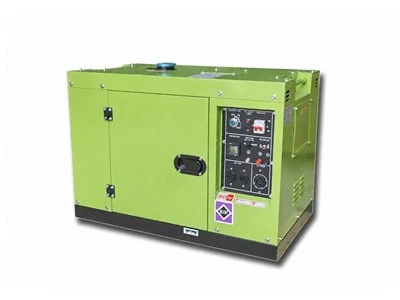
Speed regulation is a crucial aspect of Canopy Diesel Generators, playing a significant role in ensuring their stable and efficient operation. As a leading supplier of Canopy Diesel Generators, we understand the importance of speed regulation and its impact on the performance of these power generation units.
The Basics of Speed Regulation in Canopy Diesel Generators
In a Canopy Diesel Generator, speed regulation refers to the ability to maintain a consistent rotational speed of the generator's engine under varying load conditions. The engine of a diesel generator is designed to operate at a specific speed, typically measured in revolutions per minute (RPM). For most standard generators, the target speed is 1500 RPM or 1800 RPM, depending on the frequency requirements (50 Hz or 60 Hz respectively).
The main reason for maintaining a constant speed is to ensure a stable output voltage and frequency. The electrical power generated by the generator is directly related to its speed. If the speed fluctuates, the output voltage and frequency will also vary, which can cause problems for the connected electrical equipment. For example, an unstable frequency can lead to malfunctions in sensitive electronic devices such as computers, servers, and medical equipment.
How Speed Regulation Works
There are two main methods of speed regulation in Canopy Diesel Generators: mechanical and electronic.
Mechanical Speed Regulation
Mechanical speed regulation is the traditional method used in older generator models. It relies on a mechanical governor, which is a device that senses the engine speed and adjusts the fuel supply accordingly. When the load on the generator increases, the engine speed tends to drop. The governor detects this decrease in speed and opens the fuel valve to increase the fuel supply, thus increasing the engine speed back to the set point. Conversely, when the load decreases, the governor closes the fuel valve to reduce the fuel supply and maintain the speed.
While mechanical governors are relatively simple and reliable, they have some limitations. They are less precise than electronic governors and may not be able to respond quickly to sudden changes in load. This can result in small fluctuations in speed and output voltage, especially under heavy or rapidly changing loads.
Electronic Speed Regulation
Electronic speed regulation is a more advanced method that uses electronic sensors and control systems to monitor and adjust the engine speed. The electronic governor continuously measures the engine speed using a speed sensor and compares it to the set reference speed. If there is a difference between the actual speed and the set speed, the governor sends a signal to the fuel injection system to adjust the fuel supply.
Electronic speed regulation offers several advantages over mechanical speed regulation. It is more precise, allowing for tighter control of the engine speed and output voltage. It can also respond more quickly to changes in load, reducing the impact of load fluctuations on the generator's performance. Additionally, electronic governors can be programmed to provide different speed control strategies, such as droop control or isochronous control, depending on the specific application requirements.
Factors Affecting Speed Regulation
Several factors can affect the speed regulation of a Canopy Diesel Generator. These include:
Load Characteristics
The type and magnitude of the load connected to the generator have a significant impact on speed regulation. Non-linear loads, such as those containing electronic devices with switching power supplies, can cause rapid changes in load demand, which can be challenging for the generator's speed control system to handle. Additionally, large sudden loads, such as the starting of a motor, can cause a significant drop in engine speed if the generator's speed regulation system is not fast enough to respond.
Engine Condition
The condition of the generator's engine also affects speed regulation. A well-maintained engine with clean fuel injectors, proper compression, and good lubrication will be able to maintain a more stable speed than an engine that is in poor condition. Regular maintenance, including oil changes, filter replacements, and engine tune-ups, is essential for ensuring optimal speed regulation.
Ambient Conditions
Ambient temperature, altitude, and humidity can also affect the performance of a Canopy Diesel Generator and its speed regulation. High temperatures can reduce the engine's power output and efficiency, while low temperatures can make it more difficult for the engine to start and maintain a stable speed. Altitude can also affect the engine's performance, as the reduced air density at higher altitudes can lead to a decrease in power output.
Importance of Speed Regulation for Our Canopy Diesel Generators
As a supplier of Canopy Diesel Generators, we understand the importance of speed regulation for our customers. Our generators are designed to provide reliable and stable power, and speed regulation is a key factor in achieving this.
By ensuring precise speed regulation, our generators can provide a consistent output voltage and frequency, which is essential for the proper operation of electrical equipment. This is particularly important for applications where sensitive electronic devices are used, such as in data centers, hospitals, and industrial facilities.
In addition, our generators are equipped with advanced electronic speed regulation systems that can respond quickly to changes in load, ensuring a smooth and stable power supply even under challenging conditions. This helps to minimize the risk of power outages and equipment damage, providing our customers with peace of mind.


Our Product Range
We offer a wide range of Canopy Diesel Generators with different power ratings to meet the diverse needs of our customers. Some of our popular products include:
- 50kw Silent Diesel Generator: This generator is ideal for medium-sized applications, providing reliable power with low noise levels.
- Low Noise Diesel Generator: Our low noise generators are designed to minimize noise pollution, making them suitable for use in residential areas, hospitals, and other noise-sensitive environments.
- 20kw Silent Diesel Generator: This compact and efficient generator is perfect for small to medium-sized applications, offering reliable power with a low noise profile.
Conclusion
Speed regulation is a critical aspect of Canopy Diesel Generators, ensuring stable and efficient operation. As a supplier of these generators, we are committed to providing our customers with high-quality products that offer precise speed regulation and reliable power. Whether you need a generator for a small business, a residential property, or an industrial application, we have the right solution for you.
If you are interested in purchasing a Canopy Diesel Generator or have any questions about our products, please feel free to contact us. Our team of experts will be happy to assist you in finding the best generator for your needs and provide you with all the information you need to make an informed decision.
References
- "Diesel Generator Handbook" by John Twidell and Tony Weir
- "Power Generation Systems: Design, Analysis, and Operation" by Ali Keyhani