


The power factor is a crucial parameter that significantly impacts the performance of a standby diesel generator set. As a provider of Standby Diesel Generator Set, understanding this relationship is vital for both us and our customers. In this blog, we will delve into the concept of power factor, how it affects the performance of standby diesel generator sets, and the implications for users.
What is Power Factor?
Power factor (PF) is defined as the ratio of real power (P) to apparent power (S) in an electrical circuit. Real power, measured in kilowatts (kW), is the actual power consumed by the electrical load to perform useful work, such as running motors, lighting, and electronic devices. Apparent power, measured in kilovolt - amperes (kVA), is the product of the voltage and current in the circuit.
Mathematically, the power factor is expressed as:
[PF=\frac{P}{S}]
The value of the power factor ranges from 0 to 1. A power factor of 1 (or unity) indicates that all the electrical power supplied to the load is being used effectively, with no reactive power. Reactive power (Q) is the power that oscillates between the source and the load due to the presence of inductive or capacitive elements in the circuit, such as motors, transformers, and fluorescent lights. A low power factor means that a significant portion of the apparent power is reactive power, which does not contribute to useful work but still requires the generator to supply current.
Impact on Generator Capacity Utilization
One of the most significant ways the power factor affects a standby diesel generator set is in terms of capacity utilization. Generator sets are typically rated in kVA, which represents their apparent power - handling capacity. However, the real power that the generator can effectively deliver to the load depends on the power factor of the load.
For example, consider a 1000 kVA standby diesel generator set. If the load has a power factor of 1, the generator can deliver 1000 kW of real power. But if the power factor of the load drops to 0.8, the real power output of the generator is limited to 800 kW ((1000\times0.8)). This means that even though the generator has a 1000 kVA rating, it can only supply 800 kW of useful power to the load. As a result, for a given load demand, a lower power factor requires a larger - rated generator set to meet the real power requirements.
This has implications for both the initial investment and the long - term operating costs. Customers may need to purchase a larger generator than necessary if they expect a low - power - factor load, which increases the upfront cost. Additionally, a larger generator may consume more fuel and require more maintenance, leading to higher operating costs over time.
Impact on Generator Efficiency
The power factor also affects the efficiency of a standby diesel generator set. A generator's efficiency is determined by the ratio of the useful power output to the fuel energy input. When the power factor is low, the generator has to carry a higher current for the same amount of real power output because the apparent power is higher.
Higher current in the generator windings leads to increased resistive losses ((I^{2}R) losses), where (I) is the current and (R) is the resistance of the windings. These losses result in the conversion of electrical energy into heat, reducing the overall efficiency of the generator. As a result, more fuel is consumed to generate the same amount of useful power, leading to higher fuel costs and increased environmental impact.
For example, a generator operating at a low power factor may have to run at a higher load to meet the real power demand, which can push the engine closer to its maximum capacity. This can cause the engine to operate less efficiently and may also lead to increased wear and tear on the engine components.
Impact on Voltage Regulation
Voltage regulation is another important aspect of generator performance that is affected by the power factor. A standby diesel generator is designed to maintain a relatively constant output voltage under varying load conditions. However, the power factor of the load can significantly affect the voltage regulation of the generator.

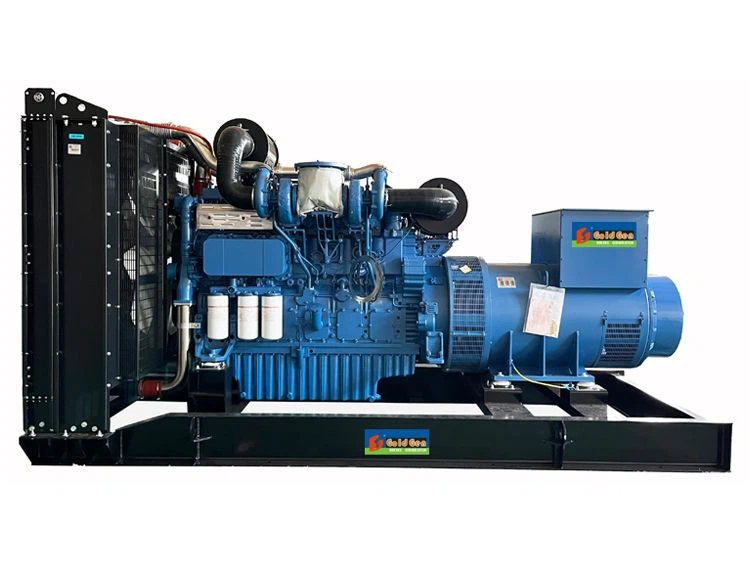
Inductive loads, such as motors, typically have a low power factor and cause a voltage drop in the generator. When the generator supplies current to an inductive load, the magnetic field created by the inductive elements in the load opposes the change in current, which results in a phase shift between the voltage and current. This phase shift can cause the output voltage of the generator to decrease, especially at high loads.
On the other hand, capacitive loads, which have a leading power factor, can cause the output voltage of the generator to increase. If the power factor of the load varies widely, it can be challenging for the generator's voltage regulator to maintain a stable output voltage. Poor voltage regulation can damage sensitive electrical equipment connected to the generator, such as computers, servers, and electronic control systems.
Solutions to Improve Power Factor
As a Standby Diesel Generator Set supplier, we understand the importance of addressing power - factor issues. There are several ways to improve the power factor of a load connected to a standby diesel generator set:
-
Power Factor Correction Capacitors: These are devices that can be installed in parallel with the load to counteract the reactive power of inductive loads. By adding capacitive reactance to the circuit, the power factor can be improved, reducing the overall reactive power and increasing the real - to - apparent power ratio.
-
Load Management: Proper load management can also help improve the power factor. This involves selecting and sizing electrical equipment to have a higher power factor. For example, using energy - efficient motors with a higher power factor can reduce the overall reactive power demand of the load.
-
Generator Sizing and Selection: When selecting a standby diesel generator set, it is important to consider the power factor of the expected load. Choosing a generator with a higher kVA rating than the calculated real power demand can help ensure that the generator can handle the load even at a low power factor.
Implications for Different Types of Generator Sets
The impact of power factor is not uniform across all types of diesel generator sets. Let's take a look at how it affects some specific types:
Construction Diesel Generator
Construction sites often have a variety of electrical equipment, including motors for pumps, compressors, and power tools. These devices typically have a low power factor, which can put a strain on the construction diesel generator. A low - power - factor load can cause the generator to operate at a higher capacity than necessary, leading to increased fuel consumption and potential overheating. To ensure reliable operation on construction sites, it is important to select a generator with sufficient capacity and consider power - factor correction measures.
Open Type Diesel Generator
Open - type diesel generators are often used in less - critical applications where cost is a major factor. However, they are also more susceptible to the effects of low power factor. Since they may not have advanced voltage regulation and power - factor correction systems, a low - power - factor load can cause more significant voltage fluctuations and reduced efficiency. Proper load analysis and potentially adding external power - factor correction equipment are necessary to optimize the performance of open - type diesel generators.
Marine Diesel Generator Set
Marine applications require high - reliability power sources. The electrical systems on ships often include a mix of inductive and capacitive loads, which can result in complex power - factor scenarios. A low power factor in a marine diesel generator set can not only affect the efficiency and capacity utilization but also pose risks to the safety of the ship's electrical equipment. Therefore, marine diesel generator sets need to be carefully designed and equipped with advanced power - factor correction systems to ensure stable and efficient operation.
1200 KW Cummins Silent Generator
The 1200 KW Cummins silent generator is a high - capacity generator designed for applications where quiet operation is essential, such as data centers or hospitals. These applications typically have a mix of sensitive electronic equipment and large - scale electrical loads. A low power factor can cause voltage instability and reduced efficiency, which can be particularly damaging to the sensitive equipment. Adequate power - factor correction measures are crucial to maintain the performance and reliability of such a high - power generator.
Importance of Considering Power Factor for Customers
For customers, understanding the power factor and its impact on the performance of a standby diesel generator set is essential for making informed decisions. When purchasing a generator set, customers should not only consider the rated kVA but also the expected power factor of their loads. By choosing a generator that is properly sized and equipped to handle the power - factor requirements of their application, customers can save on upfront costs, reduce long - term operating expenses, and ensure the reliable operation of their electrical systems.
Contact Us for More Information
If you are in the market for a standby diesel generator set and want to learn more about how power factor affects performance and what solutions are available, we are here to help. Our team of experts can assist you in selecting the right generator set for your specific application, taking into account the power factor of your load and other important factors. Contact us to start a conversation about your power generation needs.
References
- Chapman, S. J. (2012). Electric Machinery Fundamentals. McGraw - Hill Education.
- Beeman, D. W. (2000). Practical Electric Power Generation. Marcel Dekker.
- Kusko, A. (1973). Electric Power Generation, Transmission, and Distribution. John Wiley & Sons.


