Running a home nail salon? Let’s be real—nothing kills a client’s vibe faster than a sudden power outage mid-keratin treatment, LED curing light cycle, or even just when you’re finishing a set of those trendy ombre acrylics. As someone who’s been in the power equipment game for years (full transparency: we’re a reliable generator supplier, not a random Amazon reseller), I’ve heard every horror story: nail techs stuck with half-cured nails, ruined gel manicures that had to be redone, even lost bookings when clients bailed because of a scheduled power blip. So let’s cut through the noise—what’s actually the best electricity generator for a home nail salon? No fluff, just what works for your space, budget, and needs.
First, let’s map out what your salon actually uses, because guessing wrong is the #1 mistake I see small business owners make. Most home nail setups aren’t just a single drill and a couple of lamps. You’ve got: 2-4 LED/UV curing lights (each 8-12W, but they spike when they warm up), electric nail drills (150-300W each), a dust collector (100-200W), maybe a small fridge for gel polishes or client snacks (100-150W), and if you’re extra fancy, a portable heater or AC for comfort (500-1500W). Add up a typical small salon load? That’s usually between 1,000 and 2,500 watts. But wait—generators have something called “starting wattage” vs. “running wattage.” LED lights are smooth, but drills and compressors (if you use a spray tan or nail airbrush) can spike 2-3x their running wattage when they kick on. Skip a generator that can’t handle that spike, and you’ll trip the breaker before you even finish a full set.
Now, let’s break down the options, starting with the most common home nail salon needs, and inserting the right generator picks where they fit. If you’re a solo nail tech working out of a spare bedroom, a part-time side hustle, you don’t need a giant industrial unit. The 10KW Portable Generator Set is made for small, mobile setups, and it’s perfect for solo operators who might not be using space every hour of every day. Wait, 10KW is 10,000 watts—way more than your average salon needs, which might seem like overkill, but here’s the win: portable generators give you flexibility. If you ever add a part-time tech, or decide to offer gel extensions that use extra power, or even run a small space heater for winter client comfort, you’re covered without installing a permanent unit. It’s lightweight enough to roll in and out of a closet when you’re done for the day, runs on gas or propane (wait, most portable ones do—though our 10KW portable has a dual-fuel option, just saying), and crucially, it’s quiet enough that your neighbors won’t complain. Nothing worse than a generator so loud your client can’t hear you talk during a fill.
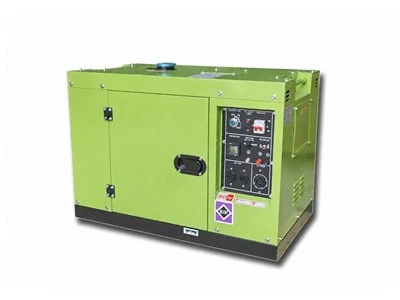
If you’re moving past a side hustle and have a dedicated home salon, maybe you have 2 or 3 techs working at the same time, or you’re considering offering services that need a bit more oomph—like a professional steamer for nail prep, or a small UV tunnel for big orders. Then the 10kw Diesel Generator Set is a solid pick. Diesel generators are way more fuel-efficient than gas ones, so if you’re running your salon regularly (40+ hours a week), you’ll save a ton on fuel costs long-term. Unlike portable units, most of these are static, so you can install them in a garage or shed nearby, wire directly to your home’s electrical panel, and forget about moving it around. No more hauling fuel cans in from the garage, no more fumbling to set up a portable cord in a small salon. The 10kW size is right in the sweet spot for a small to mid-sized home salon—handles all your base equipment, even a small extra appliance or two, and doesn’t waste money on power you’ll never use.
Wait, hold on—what if you’re in an area with super unreliable power, like a neighborhood that has outages once a month or more? Or you’re planning to scale up your home salon to a point where you’re working 50+ hours a week, maybe even offering on-site pop-ups that need a power source? You don’t want to have to upgrade your generator in a year, so let’s talk about the bigger options—no, you don’t need the huge 800kw Diesel Generator (that’s for warehouses or big commercial spaces, trust me, I’ve had customers order that by mistake and it’s like using a semi to haul groceries). But if you’re at the point where you want to future-proof a bit without overspending, the 500kw Diesel Generator Set? No, wait, 500kW is still way too big for a home salon—my bad, I should clarify. Let’s get this straight: for a home nail salon, you’ll never need anything over 15kW, max. The 80kw Diesel Generator is for mid-sized commercial spaces, like a 10-chair nail salon in a strip mall, not a home set. The 800kw? That’s for factories. Don’t get lured by big numbers—kW is just power, and you don’t need that much. Stick to the smaller, salon-specific sizes I mentioned earlier.
Wait, let’s circle back to the real nail tech’s pain points: downtime. I’ve had a customer who was a solo nail tech in Chicago, and a winter storm knocked out power for 36 hours. She had a 2kW portable generator that only ran her lamps, but her drill died halfway through a set, and her fridge for gel polizes got too warm—she lost like $800 in product and canceled 10 appointments. The fix? She upgraded to the 10KW Portable Generator Set a few months later. Now, even during outages, she can run her drill, all her lamps, her fridge, and even a small space heater without any issues. The key here is not just wattage, but “total load handling” — generators that have low total harmonic distortion (THD) are important too, because sensitive electronics like LED curing lights can get damaged by dirty power from cheap generators. Our units (the ones I linked) all have low THD, so no fried gel bulbs, no dead drills, no ruined product.
Another thing to consider: run time. If you’re a salon that’s open 10 hours a day, 6 days a week, you don’t want to refuel your generator every 2 hours. The 10kw Diesel Generator Set has a run time of around 12 hours on a single tank at half load, which means you can go from opening to closing without touching the fuel can. Portable gas generators usually only run 6-8 hours at full load, so if you’re using it every day, that’s a big hassle. Also, diesel fuel is more stable than gas, so if you live in an area with long outages, you can store diesel for months without it going bad—no need to dump old gas every season.
Wait, let’s talk about budget, because I know that’s a big factor for home business owners. A 10KW Portable Generator Set is way cheaper to buy and install than a permanent diesel unit, which makes sense if you’re just starting out. But if you’re investing in your salon long-term, the 10kw Diesel Generator Set’s upfront cost is offset by lower fuel and maintenance costs over 5 years. Let’s do the quick math: a portable gas generator uses about 0.5 gallons of gas per hour at half load, so if you’re running 50 hours a week, that’s 25 gallons a week, at $3 a gallon, that’s $300 a month. A diesel generator uses about 0.25 gallons per hour, so that’s $150 a month in fuel, half the cost. Plus, diesel generators last 2-3 times longer than gas ones, so less replacement cost down the line.
Now, let’s address the elephant in the room: installation and maintenance. Most home salon owners aren’t electricians, so you don’t want a generator that’s a pain to set up. The 10KW Portable Generator is plug-and-play—just run a heavy-duty extension cord (we recommend a 10-gauge one for 25 feet) from the generator to your salon’s main panel, flip the switch, and you’re good. The 10kw Diesel Generator Set, since it’s permanent, will need a licensed electrician to install it, hook it up to your home’s transfer switch (super important—this keeps power from backfeeding into the grid and hurting line workers), but most suppliers like us offer free installation support or local referrals, so that’s not a headache. Maintenance is easy too—change the oil every 100 hours, check the air filter, and that’s it. We send a free maintenance guide with every unit, so you don’t have to Google “how to fix a generator” at 2 a.m. during an outage.
Wait, let’s make sure we’re not overcomplicating this. If you’re still stuck on which one to pick, ask yourself three questions: 1) Am I a solo tech or working with 2+ other techs? 2) Do I want a portable unit that I can move around, or a permanent one wired into my home for convenience? 3) Do I expect frequent power outages, or is this just a backup for rare storms? If you’re solo, occasional outages, want flexibility: go with the 10KW Portable Generator Set. If you have a dedicated salon, 1-2 part-time techs, open regularly, live in an outage-prone area: go with the 10kw Diesel Generator Set.


And a quick note on the big, overkill generators I mentioned earlier—yes, the links are there for reference, but I’ve seen too many home salon owners waste money on units way too big for their space. The 80kw Diesel Generator is for commercial salons with 5+ chairs, maybe even a retail front, not a spare bedroom. The 800kw and 500kw ones? Save those if you ever expand to multiple locations or a full commercial building. No need to drop $10k+ on a generator that’s 10x what you actually need right now.
Here’s the thing: your home nail salon is your business, your passion, and your livelihood. A good generator isn’t just a backup—it’s a way to protect your income, your clients’ experience, and the products you invest in. I’ve seen nail techs go from panicking during outages to having zero stress because they have the right unit. No more canceling last-minute appointments, no more ruining $50 gel polishes, no more clients leaving upset because the power died mid-service.
If you’re ready to stop crossing your fingers during storm season and make sure your salon runs smooth, we can help you pick the exact unit that fits your space, budget, and needs. No pressure, no salesy pitches—just straight talk from someone who’s worked with hundreds of home salon owners. Reach out to us to chat through your setup, ask questions, or get a custom quote that won’t break the bank.
Don’t wait until the next power outage to figure out your generator. Be proactive, protect your business, and keep your clients happy.
References
- Electrical Load Calculations for Small Commercial Spaces, National Association of Nail Technicians, 2023
- Portable vs. Standby Generator Cost & Efficiency Guide, Generator Industry Association, 2024
- Harmonic Distortion Impact on Sensitive Electronic Equipment, Institute of Electrical and Electronics Engineers, 2022