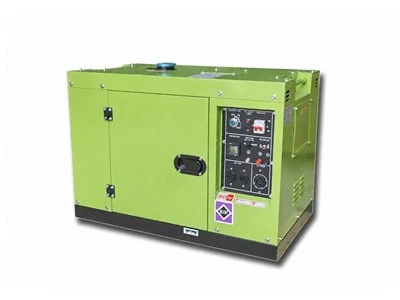
Hey everyone, if you’re someone who runs a farm, manages a small barn, or even just has a buddy who lives out in the sticks, you’ve probably had that panic moment: the power cuts out in the middle of milking season, or your heat just died when the temp drops below freezing, and you’re staring at your phone praying the grid guys can get there fast. I get it—been there, done that, spent way too many hours troubleshooting bad power fixes before I realized portable generators aren’t one-size-fits-all. Lately, a ton of folks have been hitting me up asking, “Can a portable generator set be used in a barn?” It’s not a yes/no question, honestly—there’s a ton of stuff to consider, from safety to power needs, and I’ve helped so many barn owners pick the right gear over the years, so I figured I’d break it down straight for y’all.
First off, let’s get one huge myth out of the way right now: running a generator inside a barn isn’t just “fine as long as it works.” The biggest danger here isn’t even the generator itself, it’s carbon monoxide. That silent, odorless gas will creep through every crack, every gap in your barn walls, every little space, and before you know it, you, your animals, and the dogs you keep out there are suffering. I don’t care if your barn has a big roll-up door open for half the day—running a generator inside, even in a small shed attached to the barn, is a hard no. I’ve seen a few close calls, and none of them ended well, so that’s non-negotiable. If you’re using a generator for the barn, it’s got to be outside, at least 20 feet away from any entry points, windows, or vents, with the exhaust pointed away from the barn entirely. That’s rule number one, no exceptions.


Now, assuming you’ve got safety locked in, the next big question is: what size generator do you actually need? Barns run on way different power than a regular house. You might have milking machines, water heaters for calf bottles, fans to keep hay from molding, lighting, maybe even a small refrigeration unit for bulk milk. Let’s do a quick walkthrough of common loads so you don’t overbuy (or underbuy, which is a nightmare). If you’ve got a small hobby barn—like 10 to 15 head of cattle, or a small hoop house with plants that need supplemental power—your total running load is probably around 2kW to 3.5kVA. For that, our 2kW Generator Diesel or 3.5kVA Diesel Generator are perfect. They’re compact, easy to move around, and don’t guzzle fuel like some bigger models. I sold one to a goat farmer last year who used it for his milk stand, water pump, and a single space heater in the winter, and he said it ran for 8 hours straight on half a tank, which is way more than enough for his needs.
If you’ve got a medium-sized barn—say 30 to 50 head, plus a separate hay storage area, a calving pen, and maybe a small office for billing—you’re going to need a little more oomph. A lot of these setups run 8kW, because that can handle fans, lighting, a bigger water heater, and a milking machine all at the same time. Our Generator 8kW Diesel is a go-to for this size, honestly. It’s not too heavy to move if you need to shift it to keep up with power needs, but it’s also powerful enough to handle startup loads—wait, hold on, that’s another thing people forget. Appliances like milking machines or heaters have a “surge wattage” when they turn on, which is 2-3 times their running wattage. If you buy a generator that only matches your total running load, it’ll shut down every time your heater kicks on, which is super annoying. So factor in that surge wattage when sizing up.
Now, what if you’ve got a larger operation? Like a commercial dairy barn with 100+ head, automated feeding systems, bulk milk coolers, and a full set of hay drying equipment? Then you’re looking at bigger generators, obviously. Our 250KW Electric Start Genset is a workhorse for these setups—electric start means you don’t have to crank it manually in the middle of a power outage at 2 a.m., and it’s built to run for long stretches without overheating. For even bigger needs, like if you have a separate facility with a large irrigation system or a whole processing plant, our 800kw Diesel Generator Open Set is designed for high-demand, continuous use. I work with a couple of commercial dairy owners who have those and they only have to do basic maintenance every few months, which is a huge relief when you’re busy with harvest or calving season.
Wait, another thing that’s specific to barns: dust and moisture. Barns are dusty, especially during harvest when you’re moving hay or grain around, and humidity can be high in the winter when you’re keeping the barn closed up, or damp in the spring when it’s rainy. Regular portable generators for backyards might not hold up to that. All the generators I sell are built with sealed engine components to keep dust out, and corrosion-resistant parts to handle moisture, so they don’t seize up after a few months of being parked outside next to the barn. I had a customer once who tried using a regular home generator for his barn, and it died after two weeks because hay dust got into the carburetor. Total waste of money, so make sure whatever generator you pick is rated for outdoor use and can handle rough, dusty environments.
Also, fuel storage—another big one for barns. Gas generators are cheaper upfront, but diesel is way better for long runs, and it’s less likely to go bad if you store it for a few weeks, which is common if you only use the generator during outages. Plus, diesel generators are more efficient for longer run times, which is perfect if you live in an area where power outages can last 12, 24, even 48 hours during a storm. I always recommend diesel for barn use, just because the reliability is way higher. Yeah, they cost a little more, but you won’t be stuck with a dead generator when you need it most.
Let’s talk about installation and use tips, because even the best generator is useless if you use it wrong. First, invest in a transfer switch, don’t just plug the generator into an outlet. If you plug it into a regular outlet, that backfeeds power into the grid, which is super dangerous for lineworkers who are fixing the lines. A transfer switch will isolate your barn’s power from the grid, so no one gets hurt, and it’s way easier to use—just flip the switch when the power goes out, and you’re good to go. Also, make sure you have a good grounding rod for the generator, that protects your equipment from power surges.
Another tip: test your generator every month. Don’t just buy it and let it sit in your shed for a year. Turn it on for 15 or 20 minutes, check the oil level, make sure it’s running smooth. I can’t tell you how many times someone comes to me panicking because their generator won’t start during an outage, and it’s just because they never ran it in the past year. Add it to your calendar, same as you do for feeding the animals or mucking stalls.
What about specific use cases? Let’s say you have a small hobby farm with chickens—they need heat in the winter, and their lighting affects their egg laying, so a small 2kW generator is perfect for that. If you’re into hay, you might need fans to keep the hay from molding, which a medium generator can handle. For dairy, you need power for the milking machine and the cooler, so that’s where the 8kW or 250KW comes in, depending on your size.
Wait, and one common mistake: overloading the generator. A lot of people try to power every single thing on their farm with one generator, but that’s not smart. If you have a big barn, maybe get two smaller generators instead of one giant one, so if one breaks, you still have power for the essentials. Or if you only need power for the milking machine and the water heater, you can run just that, instead of wasting fuel on powering your tractor’s battery or something. It saves you money on fuel and extends the life of the generator.
So to circle back to the original question: yes, you can use a portable generator set in a barn, but only if you do it right. Safety first—never run it inside, keep it outside away from entry points. Size it correctly, accounting for surge wattage and your specific barn’s loads. Pick a generator built for harsh environments (dust, moisture), go diesel for reliability, and use proper installation and maintenance practices.
If you’re not sure which generator is right for your barn, don’t guess. I’ve helped hundreds of farm owners pick the perfect one, and I can help you too. Just reach out, tell me what your barn’s size is, what equipment you run, and how often you expect to use the generator, and I’ll walk you through all your options. No pressure, no sales pitch that feels pushy—just straight answers for someone who works in this space and gets how stressful it is when the power goes out on a farm.
References
- National Fire Protection Association. (2022). Carbon Monoxide Hazards from Portable Generators. NFPA 110: Standard for Emergency and standby power systems.
- U.S. Environmental Protection Agency. (2023). Portable Generator Safety and Carbon Monoxide Prevention. EPA.gov.
- American Society of Agricultural and Biological Engineers. (2021). Generator Sizing Recommendations for Agricultural Applications. ASABE Standards EP275.6.