I get this question all the time from small business owners, home office managers, and people setting up pop-up print stations at events: “Can a portable genset really power a printer?” As someone who’s been in the portable generator supply business for nearly a decade, I’ve answered this so many times that I’ve developed a pretty clear framework for breaking it down—one that mixes basic electrical knowledge, real-world use cases, and the hands-on experience we’ve gained from customers who’ve actually made this work (and a few who didn’t, thanks to a small mistake or misunderstanding).
Let’s start with the core truth: Yes, a portable genset can power a printer, but only if you match the right generator to your specific printer model and power needs. This isn’t a one-size-fits-all scenario, though—too many people grab any old portable generator they find, plug in their office printer, and end up with a dead printer, a tripped generator breaker, or even damage to sensitive electrical components. I’ve seen it happen more times than I’d like: a customer brings a 1kW diesel generator to a local farmers’ market to run their professional photo printer, only to have the generator die mid-print because they drastically underrated the load. Or another uses a generic gas genset that’s “dirty” on power, frying the printer’s control board within a week.
First, let’s talk about printer power requirements, because this is the make-or-break detail most people miss. Printers aren’t like a space heater or a lamp that draws a steady, consistent amount of power. Most modern printers—whether they’re inkjet, laser, or industrial print models—have two key power ratings to pay attention to: continuous running watts and starting (or peak) watts.
Continuous watts are the steady amount of power the printer needs to operate normally, whether it’s printing a document, scanning, or running its internal functions. Starting watts, on the other hand, are the short burst of extra power needed to activate moving parts (like laser printer drums, inkjet carriage motors, or the fuser unit in laser models) when the printer turns on. For most home or small office inkjet printers, continuous watts are usually between 50 and 300, with starting watts only around 100 to 500. Laser printers, especially mid-range or high-volume models, have higher ratings: continuous watts can be 300 to 800, and starting watts can jump to 1,000 or more. Even large-format printers (like those used for banners or blueprints) can have peak power needs as high as 2,000 watts or more, depending on the model.


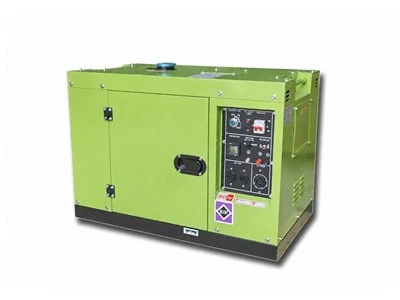
Now, turn to portable gensets. When selecting one for a printer, you need a genset that can meet both the continuous and starting watt requirements of your specific printer. Let’s connect this to our product line, since that’s what our customers rely on every day. For small home inkjet printers or basic laser printers (continuous watts under 500, starting watts under 1,000), a compact, fuel-efficient option like the Generator Diesel 2kW works perfectly. This model has a continuous output of 2,000 watts and peak (starting) output of 2,200 watts, so it has enough headroom to handle the printer’s short power bursts without overloading. It’s also compact enough to move between a home office, a remote job site, or a small event—something that’s critical for people who need portable power on the go.
For mid-range laser printers with slightly higher needs—say, continuous power around 700 watts and starting watts up to 1,200—the 2.5kVA Diesel Generator is a great pick. One kilovolt-ampere (kVA) roughly translates to 0.8 kilowatts for resistive loads like heaters, but for mixed loads like printers (which have some inductive components from motors), the conversion is close enough that a 2.5kVA genset will give you about 2,000 continuous watts and 2,750 peak watts. That extra headroom is important because it ensures the generator doesn’t strain when the printer’s fuser unit turns on—one of the biggest power draws on laser printers. I’ve had a customer who runs a small print shop out of a converted van use this exact model for their HP LaserJet Pro MFP, and they’ve had zero issues over the past two years they’ve used it at pop-up markets and remote delivery stops.
What about smaller setups? If you only have a basic home inkjet printer with very low power needs (under 300 continuous watts, under 500 peak), the 1kW Diesel Generator might seem tempting—after all, it’s compact and super lightweight. But here’s where that mistake I mentioned earlier happens: even though a 1kW genset has 1,000 watts continuous, its peak output is often only a bit higher, like 1,100 watts. If your printer has a peak start of 600 watts, that leaves almost no headroom for any other small accessories you might have plugged in (like a laptop to send print jobs from), and if the printer’s peak draw is even a little higher, the genset will trip its breaker. We always caution customers that a 1kW model is really only for the most minimal, low-power devices—like a small projector or a phone charger, not a printer. If you’re set on a diesel genset that small, double-check your printer’s exact specs; even a basic inkjet often needs more peak power than a 1kW model can handle.
For larger printers—like the 3,000-watt continuous industrial printers some sign shops use—you’ll need a more robust option, and the 3.5kVA Diesel Generator fits the bill. This model has a continuous output of 2,800 watts and peak output of 3,500 watts, which is enough to handle the biggest print models’ needs, even if you also need to run a small work light or a laptop at the same time. A lot of our commercial print customers prefer this because it’s durable for daily use, runs at a steady frequency, and has clean power that won’t damage their expensive industrial printers.
Beyond just matching wattage, there are two more critical factors that many people overlook: power quality and genset type. Printers, especially the digital and laser models used for professional work, have sensitive electronic components that can get damaged by “dirty” power—power that has inconsistent voltage, frequency spikes, or harmonics. Gas generators are often the worst for this, as they can have voltage fluctuations when the load changes, but even some cheap portable diesel gensets can have dirty power. That’s why we always recommend our Most Fuel Efficient Diesel Generator lineup for printers: these models have integrated alternators that produce stable, clean power (within 1.5% voltage regulation) that’s safe for sensitive electronics. We’ve had multiple customers tell us that switching to our fuel-efficient models fixed their printer issues—they were using a cheaper gas genset before, and after two months, their printer’s control board failed; once they switched to our clean-power diesel genset, the problem never came back.
Genset type also matters. Inverter gensets are smaller, quieter, and produce clean power, but they’re usually only rated for lower wattages (under 3kW). If you have a small printer and need portability and quiet operation (like for a home office in a residential area), an inverter model works, but our diesel-powered options are more fuel-efficient and have longer run times, which is better for people who need to print multiple jobs in a single day. Conventional portable gensets are more affordable for larger loads, but they’re noisier and produce more variable power—so they’re best suited for jobs where noise isn’t a concern, like a remote farm or a warehouse.
Another real-world tip from our team: always check your printer’s power cable and manual for a UL (Underwriters Laboratories) listing or power rating tag. Many people assume their printer draws X watts because it says so online, but sometimes the actual on-paper rating is higher, or the printer has a hidden power draw for standby mode. For example, some laser printers use 100 watts in standby, so that adds to the continuous load when you’re printing a long job. We always tell customers to add a 10-15% buffer to their printer’s total power needs—so if your printer has 700 continuous watts and 1,200 peak watts, you should look for a genset that can handle at least 770 continuous and 1,320 peak watts. That small buffer prevents overloading the genset and ensures it runs smoothly, even if you throw in a small extra load (like a laptop) to send print jobs.
I also should mention common mistakes that have caused us trouble with customers. Last year, a customer brought a 2kW diesel genset to a outdoor art show to run their large-format printer, but they had it plugged in with an extension cord that was too thin. The long, thin extension cord caused voltage drop—so the genset was actually only delivering 1,800 watts to the printer, which was enough to run the printer until it reached peak power, then tripped the breaker. The fix was simple: use a heavy-duty (14-gauge or thicker) extension cord rated for outdoor use, and keep it as short as possible (under 50 feet) to avoid voltage drop. Another mistake: running a genset indoors. Never, ever do that—generators produce carbon monoxide, which is deadly. Even if you’re running a printer in a garage, make sure the area is well-ventilated, or run the genset outside with an extension cord to the printer.
So, to circle back to the original question: Can a portable genset power a printer? The short answer is yes—when you match the genset’s wattage, power quality, and type to your specific printer’s needs, and follow basic safety tips. The long answer is that success depends on doing your homework first: check your printer’s continuous and peak power requirements, add a small buffer, choose a genset with stable, clean power (diesel models are usually better for this than gas for printer use), and make sure you use the right extension cord for the job.
If you’re not sure which portable genset is right for your printer, or you want to ask about our models specifically, we’re here to help. Our team has worked with hundreds of small business owners, home offices, and event organizers to match them with the right genset for their print needs, and we can walk you through the specs, run times, and suitability for your specific setup. Whether you need a compact model for a home inkjet or a robust unit for an industrial print shop, we have options that are reliable, fuel-efficient, and designed to power sensitive electronics like printers. Don’t guess—reach out to our team to get a tailored recommendation for your power needs.
References
- Underwriters Laboratories. (2022). Power Requirements for Sensitive Electronic Devices. Retrieved from UL Safety Standards Database
- Weichai Power. (2023). Portable Diesel Generator Technical Specifications. Retrieved from Weichai Industrial Power Documentation
- International Electrotechnical Commission. (2021). Performance of Portable Generators for Harmonic Distortion. Retrieved from IEC Technical Report 61000-3-2
- Small Business Administration. (2022). Power Solutions for Mobile Small Business Operations. Retrieved from SBA Office of Entrepreneurial Development Resources