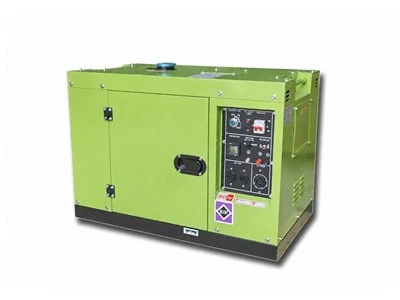
If you’ve ever been in a pinch where your 30kw diesel generator won’t fire up when you need it most—say, during a power outage for a small business, or to keep a remote worksite running—you know how frustrating that can be. As a diesel generator supplier, I’ve talked to hundreds of customers who’ve dealt with this exact issue, and most of the time, the fix is way simpler than they think. I’m going to walk you through step-by-step troubleshooting, no fancy lab gear required, so you can get your unit up and running fast. Let’s dive in.


First, let’s start with the basics that so many people skip because they assume it’s something “serious.” I can’t tell you how often I get a call from a customer saying their 30kw generator won’t start, only to find out they didn’t flip the fuel valve or the battery connections are just dirty. These are the easiest checks, so don’t skip them.
First up: Fuel system checks. Diesel generators run on consistent, clean fuel—if there’s a blockage or the fuel tank is empty, it’s not going anywhere. Start by checking the fuel gauge. Wait, does your gauge work correctly? Sometimes they get stuck, so pop the tank cap and take a quick look. If it’s empty, that’s a no-brainer—fill it with the right type of diesel (check your manual, usually #2 for most 30kw models). But if it has fuel, move on to the fuel valve. The main valve near the tank should be in the “open” position—we’ve had customers accidentally nudge it closed while moving something nearby, or flip it to off for storage and forget. Next, check for water in the fuel. Diesel absorbs water over time, which is a huge issue for starting. Most 30kw generators have a water separator drain—usually a small knob or valve near the fuel filter. Grab a container, slowly open it, and if water comes out (it’ll be clear or cloudy, not the golden color of diesel), keep draining until only fuel flows. If you don’t have a water separator, that’s something you might want to add later, but for now, that drain check is key. Also, make sure the fuel line isn’t kinked or crushed—sometimes rodents chew through them, or they get pinched when the unit is stored. If you do find a kink, straighten it out gently, and if there’s a hole, you’ll need to replace that line right away. For reference, if you ever need a backup unit for when your 30kw is out, we’ve got smaller options like the 10KW Portable Generator Set that’s great for temporary coverage.
Next, battery issues—this is the #1 reason generators won’t start, hands down. Diesel generators need a decent amount of cranking power to turn the engine over, and if the battery is dead, corroded, or loose, you’re stuck. Let’s test this. First, check the battery connections: the positive (red, usually marked +) and negative (black, -) terminals. Are they tight? Wiggling a loose connection is super common—vibration from the generator while running can loosen them over time. If they’re loose, use a wrench to tighten them just enough (don’t overdo it, you can strip the posts). Now, look at the terminals themselves—are they covered in white or green corrosion? That’s acid buildup, which blocks power flow. Grab a toothbrush and a mix of baking soda and water (about 1 tbsp baking soda per cup of water), gently scrub the corrosion off, then rinse with clean water and dry thoroughly. To keep corrosion away long-term, you can apply a thin layer of petroleum jelly or terminal protectant spray after. Now, test the battery voltage with a multimeter if you have one—set it to DC voltage, touch the positive lead to the + terminal, negative to the -. A fully charged battery should read 12.6V or higher. If it’s below 12V, it’s probably dead. Can you jump it? Most 30kw generators have a standard 12V battery, so you can use another car battery or a portable jump starter to get it going—just make sure the negative clamp connects to an unpainted metal part of the generator frame, not the negative battery terminal (to avoid sparks near fuel). If the battery still won’t hold a charge after jumping, it’s time to replace it. Another quick check: the battery cut-off switch, if your generator has one. Sometimes people flip it off to prevent drain during storage and forget to turn it back on.
Now, if fuel and battery check out, it’s time to look at the starter and ignition system. Wait, diesel generators don’t have spark plugs like gas ones—they rely on compression to ignite the fuel, so the ignition part is all about the glow plugs (for cold starts, mostly) and the starter motor. Let’s start with the glow plugs, especially if you’re in a cold climate. If it’s below 40°F (4°C), the glow plugs need to warm the combustion chamber before starting. To test them, turn the generator key to the “on” position (don’t crank it yet) and wait for the glow plug light on the control panel to go out—usually 5-10 seconds. If the light never comes on, that’s a problem. You can test the glow plugs with a multimeter too—they should have a low resistance (a few ohms) if they’re working. If a glow plug is burnt out or broken, it won’t heat the chamber enough, so fuel won’t ignite. Starter motor checks: when you turn the key, do you hear a clicking sound, or nothing at all? A clicking usually means the battery is too weak, which we already covered, but if you hear a grinding sound, that could be a bad starter gear (the pinion) that’s not meshing with the flywheel. That’s a bit more involved, but still fixable—just make sure you disconnect the battery first before touching the starter. If the starter isn’t engaging at all, check the starter relay (a small switch near the battery) to make sure it’s getting power when you turn the key. If you’re looking for a larger unit for bigger jobs, we’ve got options like the 460KW Diesel Fuel Generator for heavy-duty applications.
Next up, air intake and exhaust—this is another common culprit that people overlook. The engine needs a steady flow of clean air to mix with fuel for combustion, and if the air filter is clogged, it can’t get enough air to start. Locate the air filter housing (usually a large, round or square box on the side of the generator), loosen the clamps, and pull out the filter. If it’s covered in dust, dirt, or debris (especially if you’re in a dusty worksite or wooded area), it’s definitely clogged. A quick visual check: hold it up to a light—if you can’t see light through it, replace it or clean it (if it’s a reusable type, follow the manufacturer’s instructions). Never run a diesel generator with a clogged air filter—it’ll damage the engine over time, and right now, it’s blocking the air needed to start. Now, the exhaust system: make sure the exhaust pipe isn’t blocked with debris, like leaves or snow (if it’s winter). A blocked exhaust creates backpressure, which stops the engine from turning over. You can also check the exhaust manifold for cracks or leaks, but for basic troubleshooting, just make sure the pipe is clear.
Wait, what about control panel issues? Sometimes the problem is as simple as a wrong setting on the control panel. Let’s go through that. First, make sure the generator is in “auto” or “manual” mode, depending on how you’re trying to start it. If you’re using manual start, it needs to be in the right position—some units have a start/run/off switch, so if it’s stuck in “off,” that’s why it won’t fire. Also, check for fault codes on the control panel. Most modern 30kw generators have a digital display that shows error codes—like “low oil pressure” or “over speed.” If you see a code, look it up in your manual (I always tell customers to keep their manual handy—either in the unit or saved to their phone). For example, a low oil pressure code could mean the oil level is too low, which is a safety feature that stops the generator from starting to prevent engine damage. Check the oil dipstick—pull it out, wipe it clean, reinsert, pull it again, and make sure the level is between the “add” and “full” marks. If it’s low, top it up with the right type of diesel engine oil (again, check your manual—most 30kw units use 15W-40). Never overfill the oil either, that can cause problems too. If you don’t have a manual, we’ve got resources for all our models, so don’t hesitate to reach out. For smaller residential use, we also have the 20kw Diesel Power Generator that’s perfect for home backup.
Let’s go through a quick recap to make sure we didn’t miss anything, in case you want to run through the checklist again: 1. Fuel tank level, fuel valve open, no water in fuel; 2. Battery terminals tight and corrosion-free, battery holds charge; 3. Glow plugs working (for cold weather), starter motor engaging; 4. Air filter clean, exhaust pipe clear; 5. Control panel settings correct, no fault codes, oil level is good. If you’ve checked all these and your 30kw generator still won’t start, that’s when it’s time to look at more serious issues, like a faulty fuel injector, broken compression ring, or wiring harness problem. At that point, I’d recommend reaching out to a professional, or if you’re under warranty, contacting us. We offer support for all our units, and if you need a new unit while yours is being repaired, we’ve got options like the 1000kw Diesel Generator Set for large-scale operations, or the smaller 10kw portable we mentioned earlier for temporary coverage.
Now, a few pro tips to prevent this from happening in the future, because the best fix is no fix at all. First, do regular monthly checks, even if you don’t use the generator often. Run it for 15-20 minutes every month to keep the fuel moving, charge the battery, and prevent parts from seizing. Second, use clean, fresh diesel—old diesel (more than 6 months) can get gummy and block filters. If you store your generator for more than a few months, add a fuel stabilizer to keep the fuel fresh. Third, change your fuel and air filters every 100-200 hours of use, or as recommended in your manual. And finally, keep the area around your generator clear of debris, so air and exhaust can flow freely.
If you’ve gone through all these steps and still can’t get your 30kw diesel generator to start, or if you need help with maintenance, parts, or a replacement unit, our team is here to assist with purchasing and troubleshooting support. Don’t hesitate to reach out to us to discuss your specific needs and get the right solution for your business or home backup.
References:
- Diesel Generator Maintenance and Troubleshooting Guide, International Energy Agency, 2022.
- Common Diesel Generator Starting Failures, American Society of Mechanical Engineers, 2021.
- Small to Medium Diesel Generator Operation Manual, National Electrical Manufacturers Association, 2020.