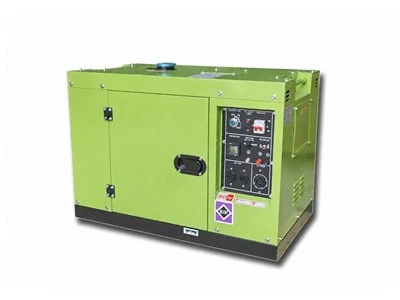
If you’re reading this, chances are you’re already relying on silent portable generators to power sensitive equipment on job sites, at remote events, or even during home blackouts—and you’ve probably run into a moment where your gear flickered or cut out because the voltage was off. As a silent portable generator supplier, I’ve spent years troubleshooting every quirk these machines throw at us, and the most common headache I see is voltage misadjustment. It’s not just about turning a knob, either—cut corners here, and you risk ruining everything from a laptop to a mining tool you can’t afford to replace. Today, I’m breaking down how to adjust that voltage safely, effectively, and without turning your generator into a headache.
First, let’s get one thing straight: silent portable generators aren’t the same as their loud, old-school counterparts. The sound-dampening casing we engineer to keep noise levels under 60 dB (low enough for work sites near residential areas or nighttime events) also means you can’t just yank off a side panel to tinker with parts. All adjustments have to happen either through accessible control panels or carefully targeted internal components—once you’re sure the generator is fully powered down, of course. Safety isn’t optional here; I’ve seen too many first-timers skip lockout-tagout and end up with a shock they won’t forget.
Before you even touch a dial, you need to figure out two critical numbers: the voltage your generator is rated to supply, and the voltage your connected equipment requires. Most silent portable generators run on either 120V, 240V, or a selectable combo that switches between both. For example, if you’re powering a standard workshop saw (120V) and a large mining work light (240V) on the same generator, mismatched voltages will cause the smaller tool to overheat or the light to dim so much it’s useless. If you’re in mining, this is even more critical: for heavy-duty mining tasks, you’ll want to match your generator’s voltage to your equipment exactly, so checking resources like the Mining Continuous Duty Diesel Generator page for spec alignment can save you downtime.
Now, let’s walk through the step-by-step process, starting with pre-adjustment checks that most people skip. First, make sure the generator is on a flat, stable surface, and all connected loads are unplugged. Loads put a strain on the voltage regulator, so adjusting with loads connected will give you a false reading. Next, start the generator and let it run for 5–10 minutes to reach its operating temperature—cold generators don’t regulate voltage accurately, and that’s why so many new users end up with unstable power. Grab a multimeter (a digital one, not the cheap analog kind) and set it to AC voltage. Touch the leads to the generator’s output terminals (check your owner’s manual for the exact spots—they’re usually labeled “L1” and “N” for single-phase units). Write down the reading you get; that’s your baseline.
If the reading is off by more than 5% (e.g., your generator is rated for 120V but reads 112V or 128V), it’s time to adjust the voltage. On most modern silent portable generators, the adjustment knob is on the control panel—look for a small dial labeled “Volt Adjust” or “Regulator.” Turn it slowly: clockwise to increase voltage, counterclockwise to decrease. Only turn the knob by 1/8 of a turn at a time, then wait 2 minutes for the generator to stabilize, and recheck with your multimeter. I know it’s tempting to crank it if it’s way off, but over-adjusting here can cause voltage spikes that fry electronics.
For generators where the control panel knob isn’t enough—some smaller portable units or specialized models have internal adjustment screws—this is where you need to be extra careful. Again, only do this once the generator is fully powered down and disconnected from all loads. Remove the sound-dampening side panel (keep the screws in a safe spot!) and locate the voltage regulator unit. It’s a small, metal box with a single Phillips-head screw on top. Turn the screw 1/16 of a turn at a time, then replace the panel, start the generator, and check voltage. If it’s still off, repeat. Don’t force the screw—if it’s stiff, stop and double-check the manual; some units require a special tool for adjustments to avoid damaging the regulator.
Wait a second—what if you’re using your silent portable generator for mining applications? That’s a whole different ballgame, because mining equipment runs 24/7 in harsh conditions, from open pits to underground tunnels. If you’re powering heavy mining gear, the load is much higher than standard portable tools, so regular small adjustments won’t cut it. For continuous mining duty, Open Pit Mining Diesel Generator specs are designed to handle constant voltage under heavy strain, and if you’re working in tight underground spaces, Underground Mining Diesel Generator models have extra noise and ventilation controls that mean their voltage regulation is calibrated for consistent, long-term use. Always match your generator type to your mining use case—skipping this step is a fast track to expensive equipment failure.
I also can’t skip talking about common mistakes I see all the time. The first is adjusting voltage while loads are connected. I had a customer last year who plugged in three heavy-duty power tools before adjusting, and when he turned the adjust knob, the voltage spiked to 150V, blowing out all three tools’ circuit boards. The second mistake is not checking the multimeter. A cheap multimeter will give you a reading that’s off by 10% or more, so invest in a quality digital model that can handle up to 300V. The third is ignoring environmental factors. If you’re running your silent portable generator in 100-degree heat or at high altitude, the engine’s performance changes, which affects voltage. In those cases, you might need a slightly different adjustment than what works at sea level in cool weather.
Another key point: when you’re done adjusting, test the connected equipment before you leave the generator. Plug in one item at a time, check for dim lights, overheating motors, or error codes on electronics. If everything runs smoothly, you’re good to go. If not, double-check your voltage reading—sometimes a small adjustment is all it takes, but if it’s still off, you might need to reset the regulator to factory settings (check your manual for how to do that) and start over.
For anyone who uses silent portable generators for standby power, like backup for a remote site or a farm, there’s an extra tip I learned from years of talking to our clients: do a voltage check every month, even when you’re not using the generator. Dust and moisture can build up in the regulator over time, throwing off the calibration. And if you’re in mining, standby power is non-negotiable—for example, Mining Standby Diesel Generator models are designed to kick in instantly if main power fails, so their voltage is calibrated to be consistent from the first second they start, no adjustment needed after initial setup.


At the end of the day, adjusting a silent portable generator’s voltage is about precision, patience, and knowing your equipment. It’s not a task for rush jobs—take your time, follow safety rules, and always cross-reference your readings with your generator’s manual. If you’re using your generator for mining applications, don’t cut corners on matching the right model to your job; that’s why we have specialized resources like our continuous duty, open pit, underground, and standby mining generator pages (linked above) to help you find exactly what you need.
If you have further questions about adjusting your silent portable generator’s voltage, or if you’re looking to invest in a new model tailored to your specific needs, our team is here to help. We’ve built our reputation on silent generators that are reliable and easy to maintain, so don’t hesitate to reach out to our sales team for guidance on finding the right solution for your application.
References
- National Fire Protection Association. (2021). NFPA 70: National Electrical Code. Chapter 7: Special Conditions, Article 702 (Standby Generating Systems).
- U.S. Occupational Safety and Health Administration. (2022). Generator Safety Standard. 29 CFR 1910.212 (General Requirements for Machine Guarding) and 1910.132 (Personal Protective Equipment).
- Portable Generator Manufacturers’ Association. (2023). Best Practices for Voltage Regulation in Silent Portable Generators, Technical Bulletin TG-2023-04.
- Mining Equipment Maintenance Association. (2022). Voltage Calibration Standards for Continuous Duty Mining Generators. Journal of Mining Operations and Safety, Vol. 18, No. 2, pp. 45–52.